
Tokyo Game Show (TGS) this year unfortunately ended with a typhoon on its last day. As a consequence, the event saw a marginal decline in attendance, marking two consecutive years of declines.
The most notable trend this year in attendance was the transition of the show from predominantly having a Japanese presence to an international one, discussed below.
Despite the number of exhibitors being flat this year, business activity boomed as the count of business meeting exhibitors grew 41% to 251. TGS has been increasingly transitioning from consumer to business over the last few years.
This year’s event also saw a stronger Indie presence on the show floor, with the Indie Game Area accounting for the largest number of exhibitors at 292.
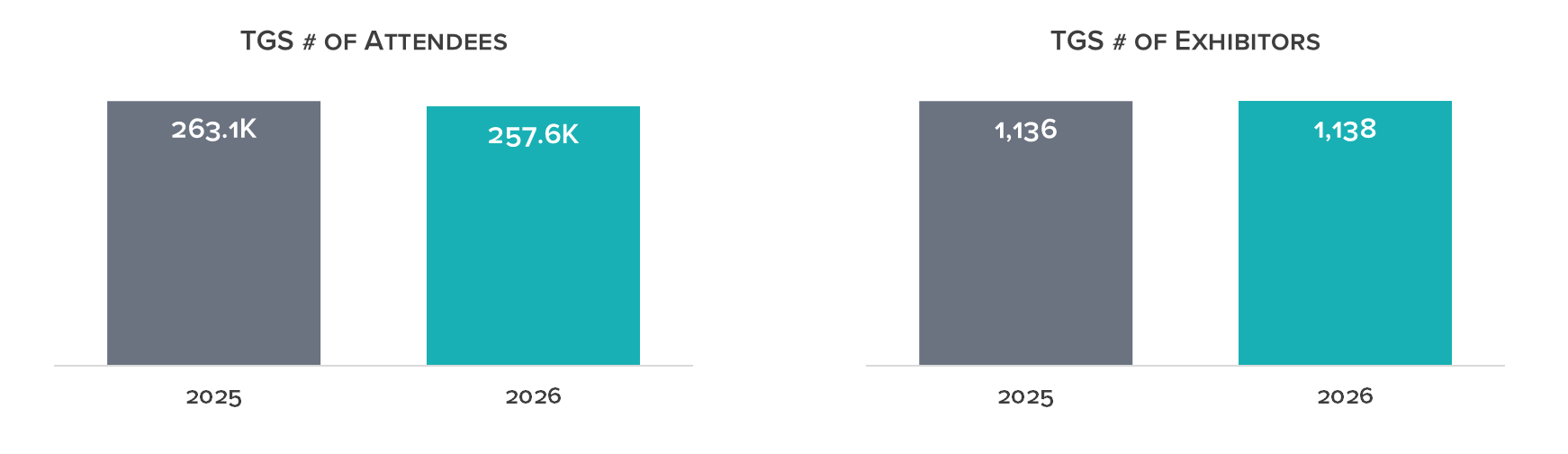
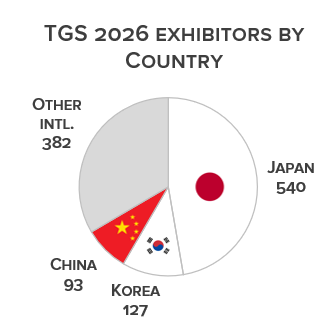
For the first time in the Tokyo Game Show’s 30-year history, the number of international exhibitors (598) surpassed Japanese exhibitors (540).
Despite the growing international presence, China moved in the opposite direction. Even with Chinese companies’ high level of partnership with Japanese developers/publishers, escalating political tensions between the two countries drove Chinese presence down 40% to 93 exhibitors this year, with publishers concentrating on ChinaJoy instead.
The silver lining for TGS was that the fall in Chinese presence was offset by Korean companies, which saw a 65% increase in presence to 127 companies this year, becoming the second most represented country.
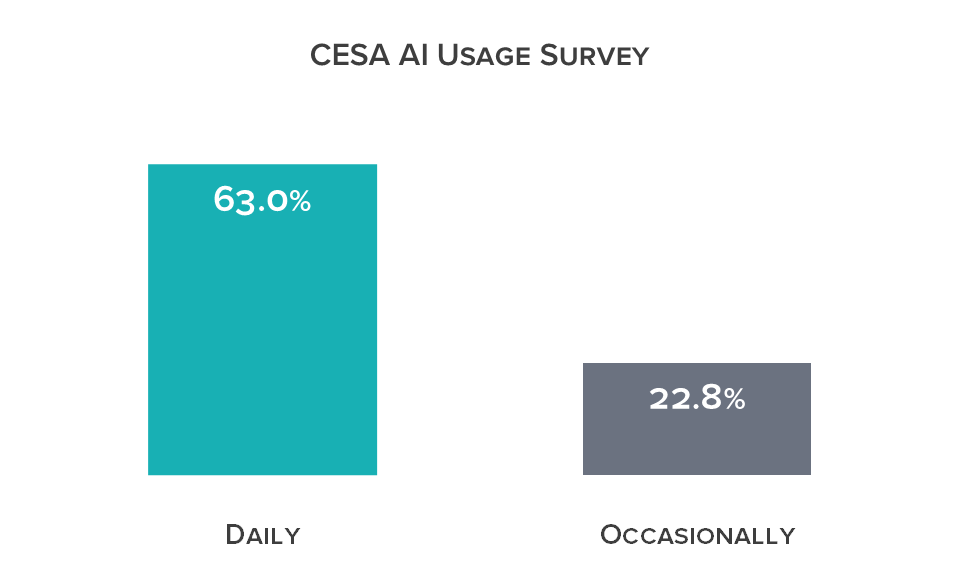
Tokyo Game Show (TGS) organizer CESA surveyed gen AI usage among Japanese developers, finding that 85.8% of respondents used gen AI in their workflows, with 63% using gen AI tools daily.
Despite this high level of AI use, the Japanese market, like elsewhere, still views it with disdain, and it remains a risky venture in terms of sentiment.
Koei Tecmo is the one publisher expanding into AI rather than retreating from it. At TGS, it announced SophieChat:AI with Spiral AI, its second AI-powered chat game after RyzaChat:AI, both based on Koei Tecmo IP.
Koei Tecmo was able to avoid backlash by marketing heavily that its artists and voice actors receive royalties from the new titles.
LEVEL5, on the other hand, did not initially disclose its AI use ahead of TGS. Its VISION showcase on 10 September drew heavy backlash after fans flagged suspected gen AI in Yo-kai Watch 2: Haunted Domain character art, and the criticism widened when the booth image it posted for TGS turned out to be AI-made too.


Phone | 415.674.4600
Email | Inquiries@IDGIntel.com
Site Credit // SouthMade