After months of rising tension, the US and Iran entered direct military confrontation at the end of February 2026, introducing a supply-side shock to global energy markets with far-reaching consequences.
- The US-Iranian conflict’s effects on gaming are already felt with all hardware and physical supply to Dubai and throughout the rest of MENA essentially cut off.
- Due to Ramadan, IDG’s channel checks and industry contacts report inventory was well-stocked across MENA at the time the conflict began, but due to strong sell-through, retailers are beginning to be concerned about future stock.
- More worrying are the conflict’s effect on energy prices and the consequential impacts on shipping costs and manufacturing cost of physical gaming hardware.
- If the conflict becomes prolonged, consumers will be hit with a combined blow of less disposable income plus higher costs due to both higher energy prices and higher-priced goods at retail.

Age of disruption
With fuel making up 50–60% of shipping costs, oil above $100/barrel feeds directly into freight rates. Current estimates point to a 10–20% rise in 2026.
- Hormuz standstill: Daily transits collapsed from 138 to fewer than 5 as tanker owners avoid the war zone.
- Fuel cost shock: Heavy fuel oil prices at the world’s top 20 bunkering hubs have nearly doubled since attacks began.
- Rerouting penalty: Ships redirecting around Africa’s Cape of Good Hope add 10–14 days and ~5,000 km per voyage.
- Rate pass-through: Carriers pass fuel surcharges to shippers, ultimately landing on consumer prices

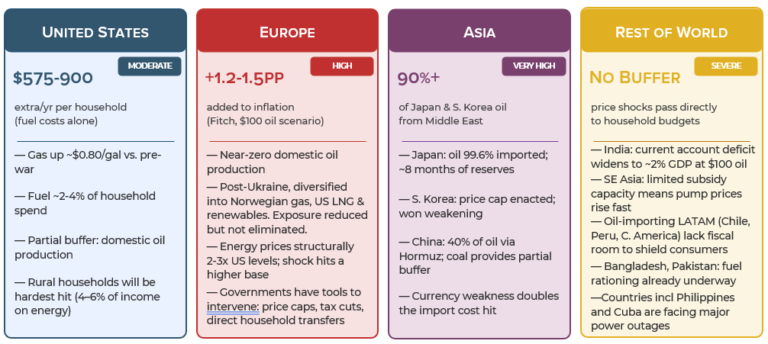
Expected Effect on Disposable Income
EXCERPT FROM IDG INTELLIGENCE · February 2026 GAMES REPORT · PC FORECAST UPDATE


